

In today’s fast-moving market, logistics is more than just transportation — it’s the backbone of customer experience, brand reputation, and long-term profitability. Even the smallest operational misstep can disrupt supply chains, delay deliveries, increase costs, and ultimately harm your business.
To help you stay ahead, here are the five most common logistics mistakes companies make — and how to avoid them.
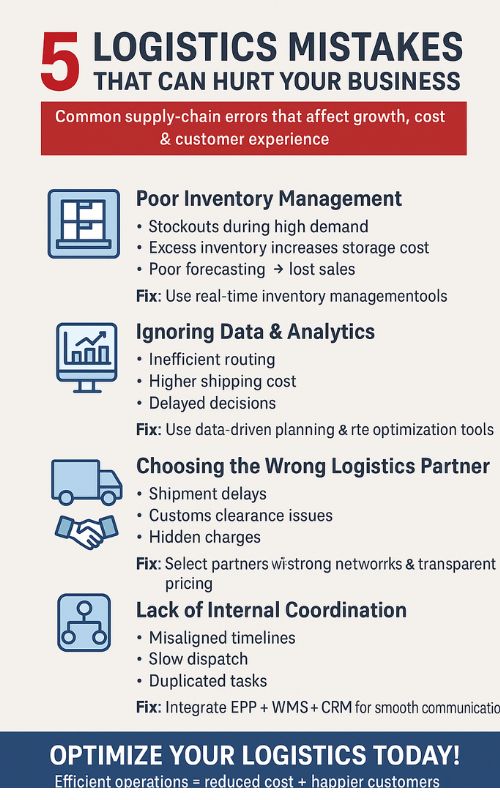
- Poor Inventory Management
One of the biggest challenges businesses face is managing stock efficiently.
Lack of proper inventory control can lead to:
- Stockouts during peak demand
- Overstocking and increased holding costs
- Outdated, unsellable inventory
- Missed sales opportunities
How to fix it:
Use automated inventory management systems that offer real-time visibility. Implement ABC analysis, set reorder levels, and forecast demand using historical sales data.
- Ignoring Data & Analytics
Many businesses still rely on guesswork instead of data-driven decisions.
This leads to:
- Inefficient routing
- Higher shipping costs
- Poor demand forecasting
- Unnecessary delays in the supply chain
How to fix it:
Adopt logistics software that tracks metrics like delivery time, shipping cost per order, order accuracy, and warehouse efficiency. Data helps optimize routes and improve operational planning.
- Choosing the Wrong Logistics Partner
Your logistics partner directly influences your service quality.
A bad choice may cause:
- Frequent shipment delays
- Customs clearance issues
- Poor last-mile delivery
- Hidden charges and compliance risks
How to fix it:
Work with a reliable 3PL or logistics partner who offers transparent pricing, strong network coverage, real-time tracking, and compliance expertise.
- Lack of Coordination Between Teams
Logistics involves multiple departments — sales, procurement, warehouse, finance, and delivery teams.
When these departments don’t communicate, you may face:
- Misaligned order timelines
- Slow approvals and dispatch
- Duplicate processes
- Increased customer complaints
How to fix it:
Implement centralized communication tools. Integrate your ERP, WMS, and CRM systems so teams work from the same data.
- Neglecting Customer Experience
Many companies overlook how logistics impacts customer satisfaction.
Mistakes such as delayed deliveries, poor packaging, or inaccurate tracking reduce trust and loyalty.
How to fix it:
Offer delivery updates, provide real-time tracking links, improve packaging quality, and maintain a fast and responsive support team.
Final Thoughts
Logistics is no longer just an operational function — it’s a strategic advantage.
Avoiding these mistakes can help you reduce costs, improve efficiency, and deliver a seamless customer experience.
Businesses that focus on smarter logistics today will be the ones that scale successfully tomorrow.