
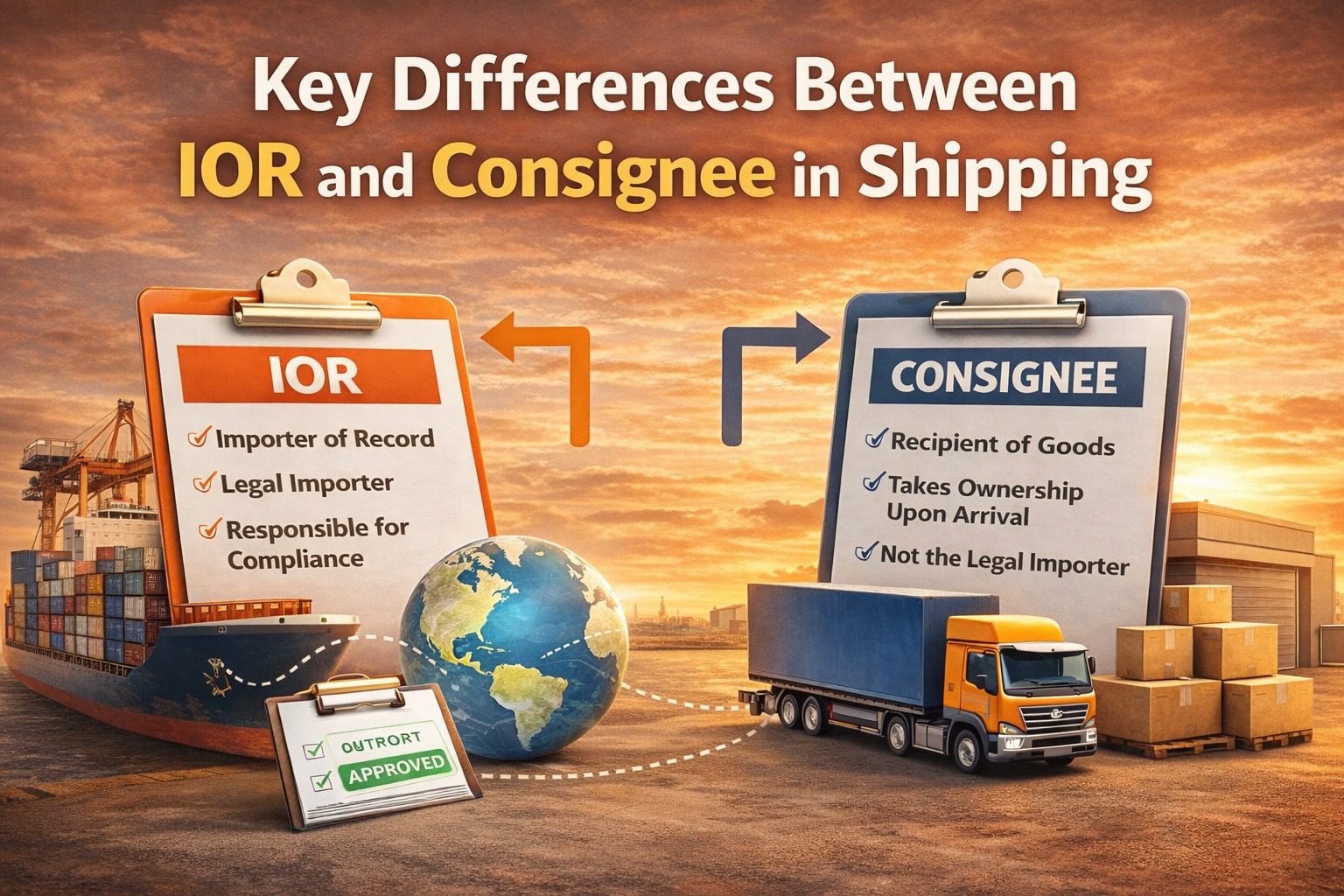
People sometimes use the phrases “Importer of Record” (IOR) and “Consignee” to indicate the same thing when it comes to international shipping. However, they have quite distinct legal implications. In places where the government controls the market, like the United Arab Emirates, not knowing these responsibilities might cause shipments to be delayed, fined, or turned away.
If you want to bring products into the UAE, it’s very important to know the difference between Importer of Record (IOR) and consignee so that you can follow the rules and go through customs quickly.
A Simple Definition
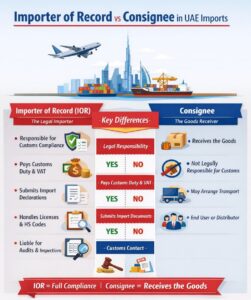
Importer of Record (IOR): The person who is legally accountable for the cargo. The IOR makes sure that all import rules are followed, pays taxes and charges, and files customs reports.
Consignee: The person or group that gets the commodities. The consignee might be the buyer, the distributor, or the final user, but they don’t always have to follow the law when it comes to customs.
Who is responsible for the law?
This is the biggest difference.
✔ The IOR is responsible to customs authorities by law.
✔ The IOR makes sure that all regulations are followed.
✔ The IOR pays customs duty and VAT.
✘ The consignee only gets the goods
Customs officials get in touch with the IOR, not the consignee, if anything goes wrong.
Role in Getting Through Customs
Importer’s Record (IOR)
- Sends in an import declaration
- Gives out licenses and certificates
- Makes ensuring that HS codes are put in the right order
- Takes care of audits and inspections
- Pays taxes and duties
Receiver
- Gets things after they have been cleared
- May set up transportation
- Could be a customer or a distributor
Customs clearance UAE, IOR services, and import declaration UAE are some of the most important terminologies.
Commercial Role vs. Compliance Role
| Role | Importer’s Record (IOR) | Recipient |
| Legal duty | Yes | No |
| Pays taxes and duties | Yes | No |
| Takes care of compliance | Yes | No |
| Gets things | Maybe or maybe not | Yes |
| Must be registered in the area | Yes | Not necessary |
This difference is quite important for international exporters who don’t have a UAE business.
Why Confusion Slows Down Shipments
A lot of overseas exporters mistakenly name the consignee as the importer. This causes complications when the consignee doesn’t have an import license.
- Customs does not have a record of the consignee.
- There are no regulatory clearances.
- Customs needs a legitimate IOR.
Because of this, shipments are still on hold and have to pay storage and demurrage fees.
When Do You Need an IOR?
You need an IOR if:
- You don’t have a legal entity in your area.
- You are bringing in goods that are controlled.
- The consignee does not have permission to import.
- You don’t want to take any risks with compliance.
This happens a lot with imports from the medical, IT, telecom, and industrial sectors.
How MAF Solutions Help Close the Gap
MAF offers expert Importer of Record (IOR) services and complete help with customs clearance.
MAF Import Solutions Offer
✔ Importer of Record (IOR) services
✔ Customs clearance in the UAE
✔ Checking that products meet standards
✔ Classifying HS codes
✔ Managing duties and VAT
✔ Coordinating with authorities
✔ Handling all paperwork from start to finish
With MAF solutions, overseas exporters may send products to the UAE and the consignee just has to worry about getting them.
Why Companies Pick MAF
Companies pick MAF because they have a good knowledge of the responsibilities of the IOR and the consignee.
- Knowledge of local rules
- Shorter times for approval
- Less chance of getting in trouble
- Responsibility for one point of compliance
MAF is the legal importer, and your consignee is the one who gets the goods.
How using the right roles affects business
Assigning IOR and consignee correctly leads to:
- Faster customs clearance
- Less chance of not following the rules
- No rejection of shipment
- Clear responsibility
- Delivery to the final user goes well
This is very crucial in fields with a lot of rules.
Final Thoughts
In shipping, the Importer of Record and the Consignee have quite distinct jobs. The IOR is fully responsible for legal and regulatory issues, whereas the consignee only gets the products.
Knowing the main distinctions between IOR and consignee in shipment will help you avoid customs delays and legal problems. Importers have a clear compliance framework, quicker clearance, and less operational risk with the help of MAF solutions.