

Introduction
One of the most critical things that affects how effectively a logistics operation works is how efficiently the warehouse is laid up. If your storage areas aren’t well-organised, you might have delays, safety issues, and greater operating expenses. On the other side, a well-planned warehouse layout design helps companies make the most of their storage space, speed up processes, and cut down on handling time.
For businesses that import, export, and distribute goods, good warehouse management is very important for keeping the supply chain running smoothly. Businesses may greatly boost productivity and cut down on operational bottlenecks with the correct planning and strategy.
Why It’s Important to Plan the Layout of a Warehouse
A well-planned warehouse layout makes sure that items flow efficiently from reception to storage and then to shipment. When the layout is improved, it helps companies in a number of ways:
- Helps in managing inventory
- Lessens the time spent moving materials
- Makes workers safer
- Adds more space for storing
- Faster order fulfilment
A good plan makes sure that every square metre of the warehouse helps the business run more smoothly.
Important Parts of a Warehouse Layout That Works Well
There are usually a few major operating areas in a warehouse. Planning these zones well makes sure that work goes smoothly.
Area for Receiving
This is where things come in and are checked before being put away. A well-planned reception area keeps things from becoming too crowded and makes it easy to unload items quickly.
Place for storage
The storage room should be set up to make the most of both vertical and horizontal space. Businesses may store more items without needing extra warehouse space by using contemporary racking systems.
Area for Picking
To cut down on travel time for personnel, the order pickup zone should be at a good spot. Putting high-demand products in the right places may speed up the processing of orders by a lot.
Area for packing and shipping
This part gets the products ready for shipping. A well-organised packaging and shipping area cuts down on delays and speeds up delivery.
Tips for Designing a Warehouse Layout That Works Best
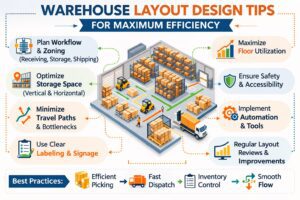
1. Make use of vertical storage space
Using vertical storage solutions like high-rise racks and pallet shelving is one of the finest methods to get the most out of your space. This lets firms keep more goods without taking up extra floor space.
2. Sort your inventory by what people want
Put fast-moving goods closer to the selecting and packaging stations, and keep slow-moving items in higher or further away racks.
3. Make sure the aisles are easy to see
Well-planned aisle space makes it easy for forklifts, personnel, and equipment to move about. Aisle design that is done well lowers the number of accidents and speeds up the handling of materials.
4. Use Smart Warehouse Technology
Barcode scanning and modern warehouse management systems (WMS) assist keep track of inventories in real time. This makes things more accurate and cuts down on mistakes made by hand.
5. Make the flow of materials better
Make sure that the arrangement makes sense so that items migrate from receiving to storage to picking to packaging to shipment. This stops you from going back and forth and saves time.
6. Make sure it is safe and easy to get to
A safe warehouse plan has the right lighting, emergency exits, and clear paths for workers and equipment. Planning for safety lowers the number of incidents at work and boosts productivity.
7. Make plans for growth in the future
Businesses develop, and so do their storage demands. A flexible warehouse layout design makes it simple to add space without having to make big alterations to the building.
Things to Stay Away From When Designing a Warehouse
Poor layout may make even big warehouses less efficient. Some frequent errors are:
- Storage spaces that are too full
- Bad handling of the aisles
- Not being able to sort inventory
- Picking paths that don’t work well
- Not following safety rules
Avoiding these problems makes sure that warehouse operations run well and can grow.
How professional warehouse planning may help
To design an effective warehouse architecture, you need to know a lot about logistics planning, storage systems, and managing workflows. Businesses may get support with warehouse planning from professionals:
- Make the most of your storage space
- Make operations more efficient
- Cut down on logistical expenses
- Use cutting-edge technology in your warehouse
A properly built warehouse can help your business run smoothly for a long time.
Why MAF Solutions is the Best Choice for Warehouse and Logistics Help
MAF Solutions specialises in helping organisations who do business internationally with all aspects of logistics and the supply chain. Our services help businesses make their storage, distribution, and shipping procedures more efficient.
We know a lot about:
- Storage and warehousing options
- Services for getting through customs
- Logistics for imports and exports
- Forwarding goods and managing cargo
- Improving the supply chain
Businesses can run their warehouses more efficiently and get their goods out quicker thanks to our experience of the sector and logistics.
Final Thoughts
A well-planned warehouse layout is very important for making things more efficient, lowering expenses, and helping a firm thrive. Companies may greatly improve their logistics performance by making the most of their storage space, better organising their inventory, and making sure that materials move smoothly.
A well-planned warehouse layout design may help you be more productive, complete orders quicker, and have a successful supply chain in the long run.