


Beginning
There are times of the year when many businesses have a lot of customers. Retail holidays, sales events, and industry-specific cycles can cause seasonal spikes in inventory that place a strain on storage, logistics, and supply chain operations.Companies who don’t prepare ahead may run out of stock, have too many items in their warehouses, have shipments delayed, and have to pay more for shipping. Effective inventory management strategies help businesses handle these fluctuations while maintaining efficient operations and customer satisfaction.Companies can handle seasonal inventory spikes and keep their supply chains running smoothly by using the correct planning and logistics methods.Why there are peaks in seasonal inventory
There are many reasons why demand can surge at certain times of the year, such as:- Big shopping days and times of year
- Sales and marketing strategies for promotions
- Demand cycles that are peculiar to each industry
- Launches of new products and unique events
- Changes in demand due to the weather
Problems During Seasonal Inventory Peaks
Not enough space in the warehouse
When there are a lot of items in store, storage facilities can fill up rapidly, which can cause warehouses to become overcrowded and make it hard to keep track of stock.Late Order Fulfillment
More orders may slow down the choosing, packing, and shipping procedures, which could lead to delays in delivery.Higher costs for logistics
During busy times, last-minute transportation plans and extra hours of work might raise operational expenditures.Wrong Inventory
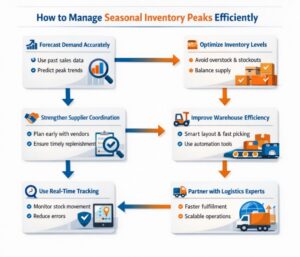
If systems aren’t maintained effectively, moving items quickly might cause stock inconsistencies and tracking mistakes.How to Handle Seasonal Inventory Peaks
1. Make sure your demand forecast is right.
Good seasonal inventory planning starts with being able to accurately predict demand. To figure out how much demand there will be in the future, businesses should look at past sales data, market trends, and their plans for advertising.2. Make the most of the warehouse layout
Rearranging the warehouse before the busy season can make operations much more efficient. To cut down on picking time, put items that move quickly closer to the packing and shipping regions.3. Make more room for storage
Businesses may need more storage space during busy times. Using temporary storage solutions or outside warehouses might let you store more merchandise.4. Use technology for managing inventory
Businesses may keep an eye on their stock levels in real time with the use of advanced warehouse management systems (WMS) and automated tracking technologies. These systems make things more accurate and cut down on mistakes made by hand.5. Make it easier for suppliers to work together
When you work directly with suppliers, you can be sure that products will arrive on schedule and in the right amounts. When demand is high, having good ties with suppliers can assist keep supply from running out.6. Plan your transportation ahead of time
Businesses can prevent delays and excessive shipping expenses during busy times by booking freight and transportation services ahead of time.7. Get warehouse workers ready and train them.
During peak seasons, you may need extra help from workers. Teaching staff how to choose, pack, and handle inventory in an efficient way keeps the warehouse running smoothly.The benefits of good seasonal inventory management
Companies that get ready for seasonal spikes in demand might get a lot of benefits:- Faster order processing
- Better accuracy in inventory
- Lower costs of doing business
- Customers are happier
- More resilient supply chains
How MAF Solutions Helps with Logistics and Inventory Management
We help organizations with complicated logistics operations by providing reliable warehouse, freight forwarding, and supply chain solutions at MAF Solutions.We offer the following services:- Storage and warehousing of goods
- Services for getting things through customs
- Managing freight and cargo
- Improving the supply chain
- Planning logistics for busy times