
The United Arab Emirates has one of the biggest automobile markets in the Middle East, with a lot of demand for passenger cars, luxury cars, and business fleets. But there are strong restrictions in place to make sure that car imports into the United Arab Emirates are safe, good for the environment, and taxed correctly.It’s important for companies and people to know about UAE car import compliance, import tariffs, and the customs clearance procedure so that shipments don’t get delayed, fined, or turned away at the port.This tutorial goes over the rules, paperwork, and responsibilities that come with importing goods, as well as how MAF solutions may assist importers make the whole process go more easily.
Rules in the UAE for importing cars
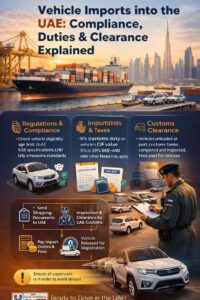
All cars brought into the UAE must meet the requirements set by the country and the GCC.Important Compliance Requirements
Vehicles must fulfill the UAE’s technical standards.In general, cars that drive on the right are not allowed.Vehicles that have been damaged by floods or changed in a way that makes them unsafe are not authorized.Cars must follow rules on emissions and safety.Used cars must be within the age restrictions set by law.If you don’t fulfill these guidelines, customs may refuse your package or force you to send it back.Required Paperwork for Importing Vehicles
In the UAE, having the right paperwork is quite important for getting through customs.Documents that are needed are:
Invoice for BusinessList of Things to PackBill of Lading or Airway BillDocument for Export or DeregistrationOrigin CertificateCertificate of Conformity for VehiclesLicense for Importer TradePassport and Emirates ID (for people)If there is a difference between the invoice value and the stated customs value, customs may check the package and give it a new value.Taxes and duties on cars that are brought into the country
When you bring a car into the UAE, you have to pay customs duty and VAT.Normal Fees
5% of the CIF value is the customs duty.VAT: 5% of the whole amount, including dutyThere may be extra expenses for handling and inspecting at the port.If customs thinks that someone is under-invoicing, they might change the claimed values.How to Clear Your Car Through Customs
There are various steps in the UAE’s car customs clearance process:The car has arrived in the UAE port.Filing an import declarationUploading of necessary papersPaying customs duty and VATCustoms checks everything out in personGiving out a clearance certificateTransfer of vehicle to the transportation authority for registrationOnly cars that pass inspections and compliance checks may be registered in the area.Special Cases: Heavy and Commercial Vehicles
You need more permissions for trucks, buses, and heavy machinery:Technical clearances from the transport authoritiesFollowing rules on weight and sizeCertification for the environmentCheck the safety equipmentIt is very important to check the paperwork ahead of time before shipping.Problems that often come up while importing vehicles
Importers often have to deal with:standards that aren’t metPaperwork that isn’t completeDisputes about valueFailures in inspectionsNot registering as a local importerThese problems lead to demurrage fees, storage fees, and problems with the supply chain.How MAF Solutions Make It Easier to Import Cars
MAF helps with all aspects of customs and import compliance for car exports to the UAE.MAF Import Solutions Include:
✔ Services for Importer of Record (IOR) ✔ Customs clearance in the UAE ✔ Checking for compliance before shipping ✔ Managing taxes and duties ✔ Handling paperwork ✔ Coordinating ports and helping with inspectionsImporters can avoid legal problems and make sure they follow all UAE customs and transportation rules using MAF solutions.